

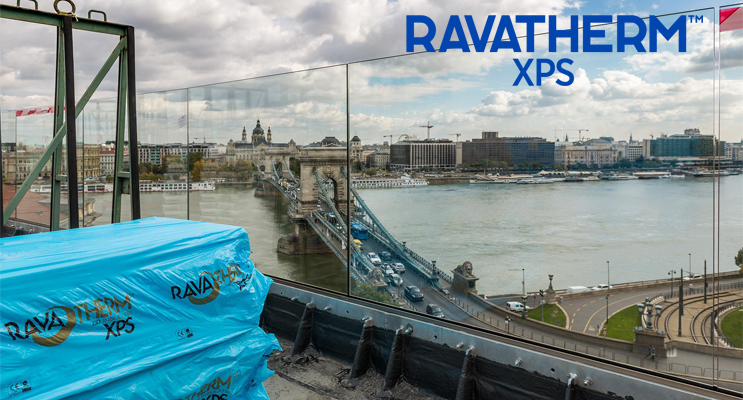

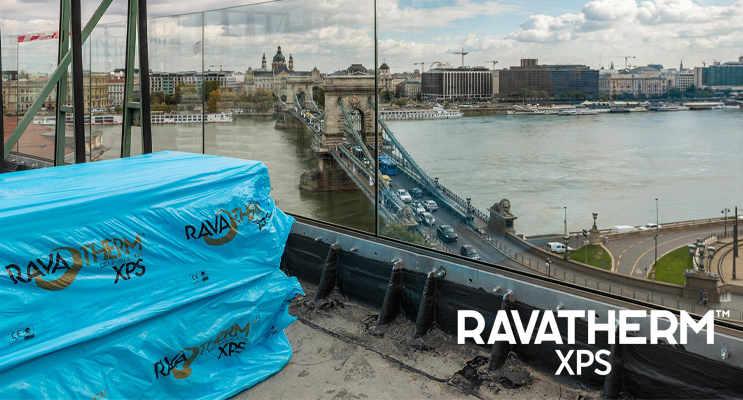
At Lánchíd bridge in Buda, at the zero kilometer mark, in a UNESCO World Heritage site, an imposing hotel, Clark Hotel, is now being built on Clark Ádám tér. Due to its advantageous touristic location, many popular attractions are within easy reach, for example the Buda Castle, the Chain Bridge, the Matthias Church, St. Stephen’s Basilica and the Citadel, the Buda Castle funicular starts right next to the building.
Previously, Buda Savings Bank stood in its place
It took a long time to decide what to build on the empty plot at the head of the Lánchíd bridge in Buda, which, according to the contractor, is “considered one of the most significant and frequented spots in Budapest in terms of its panorama, tourist traffic and historical past.” Previously, the palace of the Buda Savings Bank, designed by Miklós Ybl and built in 1862, stood here, but it could not be rebuilt because it was so big that it would overlap the current roundabout, so a four-star hotel with 86 rooms was placed in its place. The contractor’s goal is “to create one of the most successful hotels in Budapest, which, in addition to fitting into the historical environment, also fulfills tourist expectations and operational challenges for the sake of successful operation later on.”
Based on a design by Anthony Gall
The hotel was designed by Anthony Gall, an Australian-born architect who lives in our area with his family and recently won the YBL award. The building has such a restrained appearance due to the strict municipal regulations, the curved lines of the hotel follow the shape of the plot and do not stand out from the surrounding buildings. The design team really let their imaginations and creativity run wild when designing the interior of the building.
RAVATHERM XPS on the roof
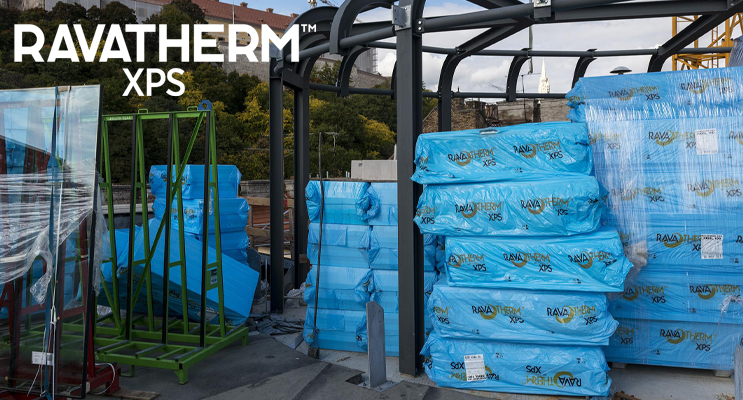
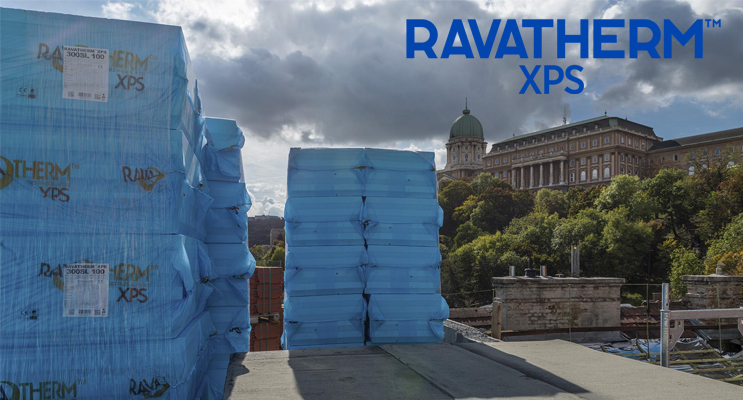
The construction of the building was carried out by Market, our RAVATHERM XPS 300 SL product was chosen for thermal insulation of the hotel’s flat roof. In the case of Clark Hotel, the thermal insulation of the flat roof was also done in reverse layer order. The advantage of laying in reverse layer order is that it is cost-effective to meet the requirements of energy regulations. Built-in thermal insulation is not only energetically useful, but also protects the waterproofing from mechanical damage during construction and use. Utilized roof surfaces, gardens, and viewing terraces can be easily created.
Source: market.hu