

Recommended Products
RAVATHERM SW
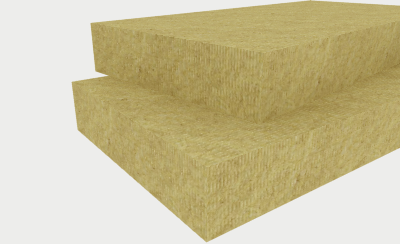
RAVATHERM SW ETICS Plus
General information
Accelerating the energy-efficient renovation of buildings is an important matter, as one of the biggest components of air pollution is the CO2 emission from the buildings, which is mainly produced during heating in winter. Most of the energy is used (39%) by residential buildings, so this is where the greatest energy saving potential can be achieved. In order to achieve the 2030 climate protection and 2050 carbon neutrality initiative, 130.000 homes would have to be fully renovated in Hungary every year. One of the main parts of the renovation is the use of thermal insulation of sufficient thickness.
Mineral wool is recommended on the exterior walls of the building, as it provides adequate acoustic and fire protection in addition to thermal insulation. Due to the properties of the material, it is fire-resistant and has a melting point above 1000 °C, thus preventing its spread in the event of fire and protecting the building's equipment. Thanks to its soundproofing properties, street noises remain outside, and a quiet and peaceful environment can be ensured inside the building.
In addition, the advantageous properties of mineral wool are that it has a high vapour permeability and a high point load capacity, which makes it easy to glue and plaster.
In the case of façade renovation, RAVATHERM SW ETICS (external thermal insulation composite system) is recommended, as the old thermal insulation base plasters are technically far below those of thermal insulation boards and therefore no longer meet today's energy standards.
According to EU Energy Regulation, the U-value requirement for external wall is U=0,24 W/m2K, so the building façade must be insulated with stonewool insulation with at least 16-18 cm thickness! The system must be prepared with glass fibre mesh and primer plaster layer according to the requirements of the external thermal insulation composite system (ETICS).
RAVATHERM SW ETICS Plus and Extra products have an even higher point load capacity, so they are recommended for special locations, such as the installation of anti-fire barriers above and below windows. For a full thermal bridge-free solution, use a few centimetres around the windows.
The façade of the building includes the plinth, which must also be insulated to avoid heat bridge effects. However, due to moisture and other increased mechanical loads, we recommend our RAVATHERM XPS 300 WB closed cell polystyrene foam thermal insulation for the socle, which is easy to plaster thanks to its specially roughened surface. The general (ETICS) building regulations apply to the construction of the thermal insulation of the plinth (see Manufacturer's Instructions and/or Construction Directive)
Installation advice
Before insulating the plinth, the start profile must be mounted. For work, use gloves, long-sleeved shirt and long trousers. During installation, the insulation boards must be placed within 10 minutes of application of the adhesive mortar. Depending on the board size, apply adhesive on the edges of the board + 2-3 adhesive stains and ensure that at least 40% of the board surface is covered with adhesive. It is important to note that stone wool boards always require additional mechanical fixation, and pre-designed fixation points must always be supported by adhesive.
At the corners of façade openings, make sure that the corners are cut out of one board. There should be no open grouts between the insulation boards, the gaps must be filled with the same insulating material. Important! The SW thermal insulation boards have fire protection class A1, and the gaps cannot be filled with lower class plastic foams (e.g. PUR). That's why the perfect fit of the thermal insulation boards are essential. Damaged insulation boards must not be installed.
In certain places of the building, where no special profile of metal or plastic is installed, a reinforcement mesh must be used.
As a general rule, where thermal insulation layer begins or ends (under the lower and upper edges, at the wall openings), appropriate protection must be provided to prevent water, insects and rodents from entering, in order to ensure surface system stability.
The glass fabric mesh strip shall be installed embedded in the system adhesive at a width of at least 10 cm and the overlapped mesh shall be glued to surface-continuity with the façade reinforcement by an overlapping extension of at least 10 cm to the top of the thermal insulation boards and/or the façade to be glued.
When insulating the window bezels, make sure that the corners are formed from one board, cutting out the location of the window in the form of an L. When applying the adhesive, make sure that the adhesive does not get between the boards or come into contact with the window frame, as this may cause the frame to discolour.
The use of a metal (aluminium) or PVC edge protection profile is essential for corners of buildings, openings and for the edge of wall openings. If possible, products with pre-attached glass fabric mesh products should be used, which must be installed embedded with system adhesive undersets before applying mortar.
For each opening on wall and in each corner, reinforced glass mesh should be used on the surface of thermal insulation, turned in 45 degrees, in a minimum size of 20x33 cm.
An important purpose of the façade insulation of a family house is to reduce the heat loss of the building. RAVATHERM SW mineral wool minimizes heat loss through the walls, due to its excellent thermal insulation capability, which can significantly reduce our heating bill. The use of mineral wool insulation on the façade also provides adequate sound insulation and fire protection.