

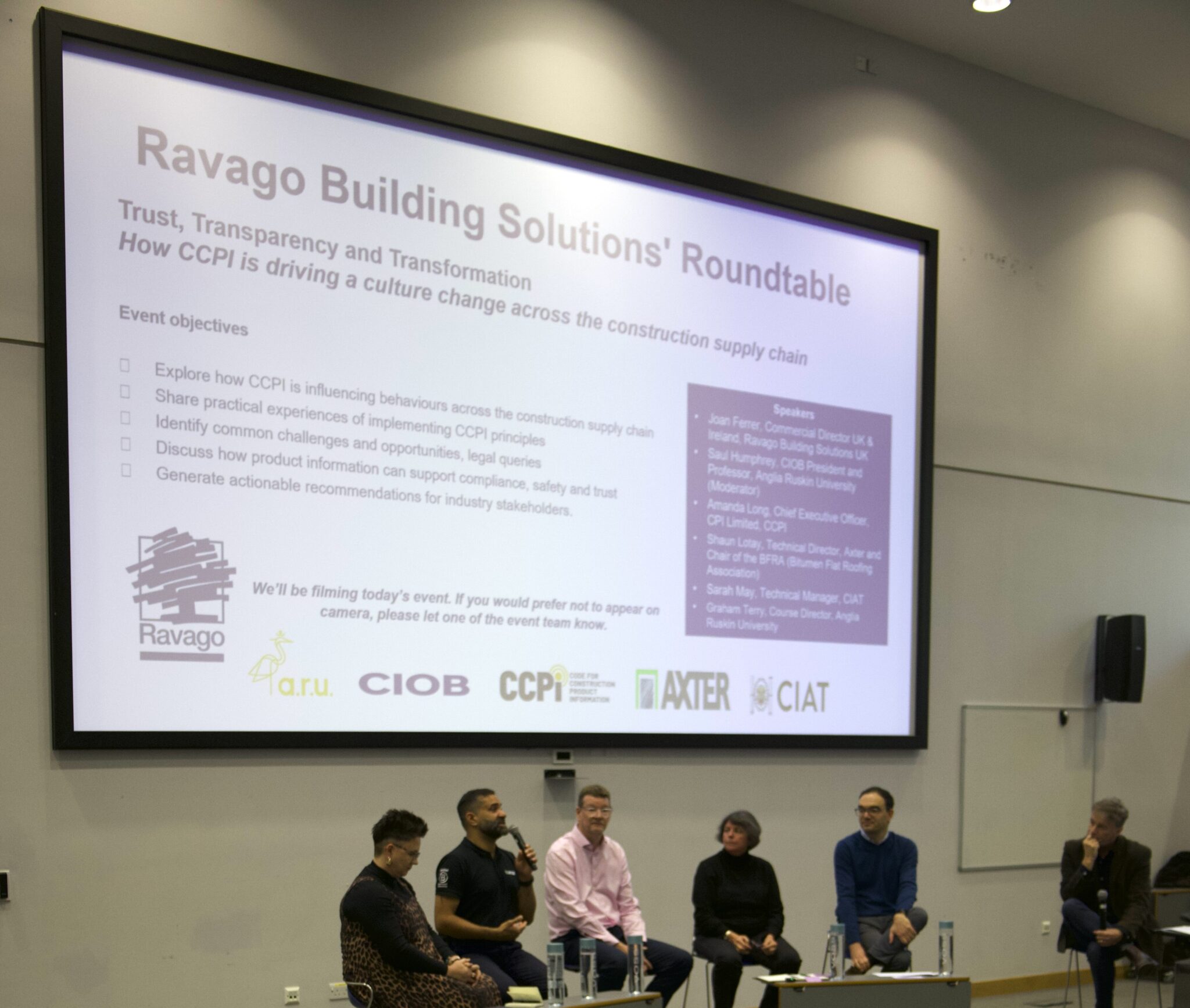
Ravago Building Solutions, the UK’s original manufacturer of extruded polystyrene (XPS) insulation, presented an industry forum on the Code for Construction Product Information (CCPI) around the theme of ‘Trust, Transparency and Transformation’.
Hosted at Anglia Ruskin University’s Chelmsford campus in November, delegates including architectural technology and construction students met to consider the success, challenges and future strategies around industry adoption of the CCPI, five years on from its introduction. The panel speakers and audience explored the topics of ‘compliance to culture: is the construction industry really changing’; ‘building trust across the supply chain’; and ‘what’s next for product information’.
“We wanted to create an opportunity for authentic discussion around the CCPI to explore the cultural shift taking place as well as the hurdles and crucially, the opportunities that adoption of CCPI delivers in terms of building transparency and trust,” said Joan Ferrer, Ravago Building Solutions UK’s Commercial Director for UK & Ireland.
Saul Humphrey, Professor of Sustainable Construction at Anglia Ruskin University and President of the CIOB, hosted the panel and moderated the debate.
“Ravago has created an engaging and valuable opportunity to share views and real-life experiences from across the built-environment industry, including from manufacturing, distribution and specifiers as well as building-safety professionals, customers and academia,” confirmed Saul. “As the tenth anniversary of the Grenfell Tower tragedy approaches, and publishing is expected of the government’s white paper on Construction Products Reform, this is an important moment to reflect on progress and the potential for CCPI to play an essential part in reform. Industry transformation demands honest, open discussion and this is a pivotal moment for the adoption of CCPI and its standards of trust and transparency.”
Saul introduced panel members Sarah May, Technical Manager, CIAT; Shaun Lotay, Technical Director, Axter, and Chair of the Bitumen Flat Roofing Association (BFRA); and Graham Terry, Course Director (Architectural Technology), Anglia Ruskin University. Amanda Long, Chief Executive Officer of CPI Limited, the administrator of the CCPI scheme, provided an overview of the CCPI and set the scene for discussion sessions.
“There are now over 150 UK organisations registered with the CCPI scheme,” commented Amanda. “The code focuses on raising standards and driving the industry towards delivery of clear, accurate, up to date, accessible and unambiguous product information. It is critical we all work towards product information and marketing in which users can have greater confidence. By encouraging open debate and genuine feedback from across the industry, including higher education, this event supported us in identifying valuable, actionable objectives.”
“We were delighted to also welcome a strong cohort of Anglia Ruskin architectural technology and construction students to this event,” said Graham Terry. “The pertinent questions posed and the ensuing debate confirms the importance of the next generation in shaping construction and the continued integration of the code within our industry.”
Questions and topics posed from the floor included queries over high-risk environments such as coastal zones, and the potential for linking CCPI data with geospatial and lifecycle datasets for long-term asset management; the particular support and skills training needed by SMEs; whether CCPI can support recycled materials and help avoid greenwashing; and how enforcement and audit mechanisms can guarantee confidence and trust in CCPI claims, in a post-Grenfell Tower era.
Shaun Lotay added: “We need an industry culture shift to being curious and asking questions, and to own the decisions we make. It’s about being professionally and personally responsible, able to substantiate claims made and taking it seriously. It means supporting informed decisions throughout the supply chain and acknowledging that accountability doesn’t rest with any one party.”
“The CCPI was clearly mandated during this event as not just a desirable marketing practice but essential to deliver transparency within the built environment,” said Sarah May. “The CIAT continues to endorse adoption of the code in line with our commitment to the highest level of professionalism and ethics in the built environment.”
Integral to the trust, transparency and transformation theme, delegates’ opinions and sentiments on topics were collected through live electronic voting, with the audience selecting ‘skills and competencies’ and ‘better data quality’ as essentials. Key takeaways for the wider construction industry included the potential for CCPI to be legally mandated; AI-supported digital product passports confirming current product data; and ongoing development of communication between construction software platforms. The panel identified immediately practicable actions including the inclusion of CCPI and its cultural significance to be introduced earlier in course teachings, alongside the Building Safety Act 2022 and Building Regulations. Ethical considerations included the need for consistent professional curiosity, and for industry leadership to endorse ‘doing the right thing, regardless’.
“Ravago Building Solutions UK has been a passionate advocate for trust and transparency across the construction sector and this deep dive into CCPI, with Anglia Ruskin University helps ensure the next generation of professionals understand the role that the scheme has to play,” concluded Joan Ferrer. “We thank our panel of speakers and enthusiastic audience for their insightful and thought-provoking questions and ideas. Importantly, today’s Trust, Transparency and Transformation debate provided an endorsement of the scheme’s success to date, its potential and what it means for the built environment today and tomorrow.”
The CCPI is a voluntary scheme that sets out clear standards for the accuracy, clarity and accessibility of construction product information. Developed by the Construction Products Association and administered by Construction Product Information Ltd, the scheme provides greater confidence that assessed product information is clear, accurate, up-to-date, accessible and unambiguous, giving greater confidence in material data.
Further details on the CCPI can be found here: https://www.cpicode.org.uk/